Decanting the Dead Zoo: behind-the-scenes
The Natural History Museum on Merrion Street, also known as The Dead Zoo, is currently closed for major refurbishment works. You can read more about it here in our FAQ
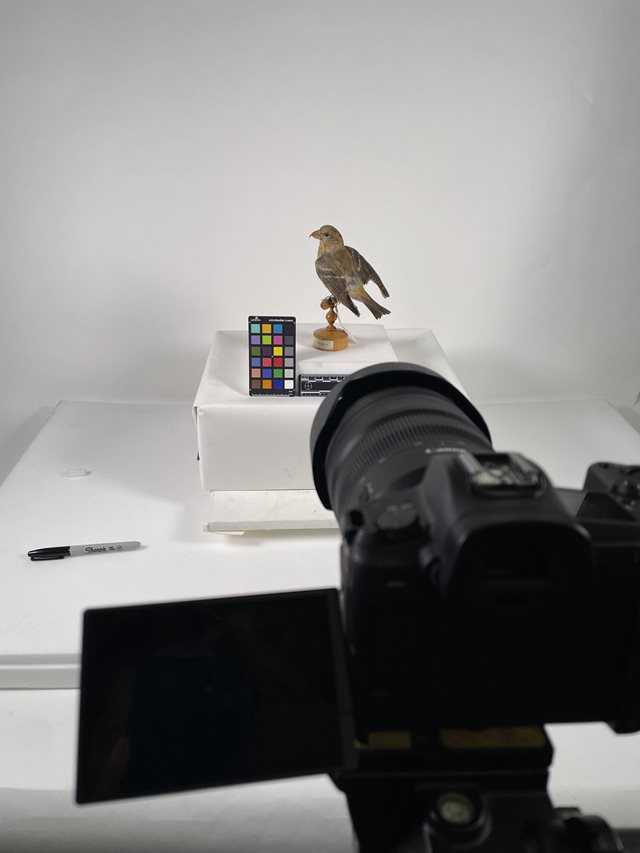
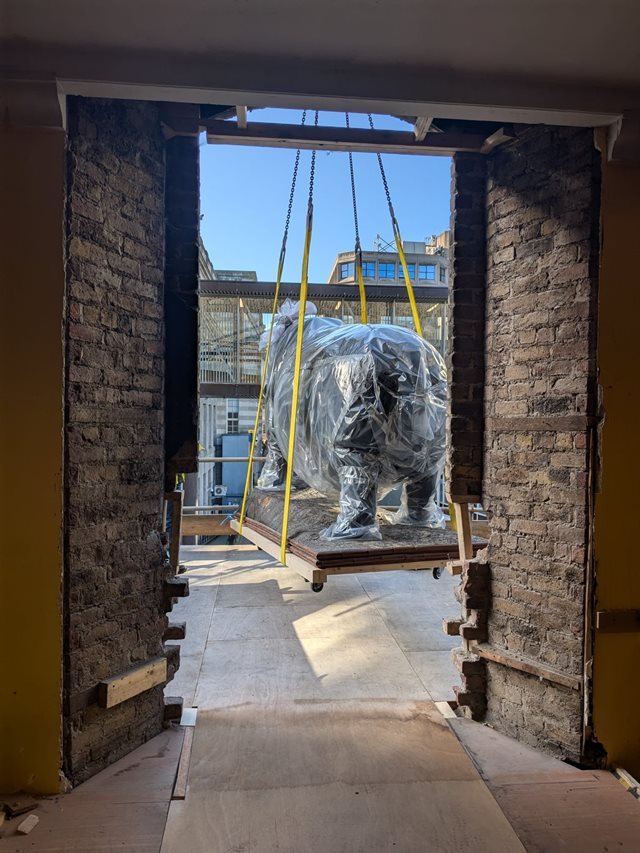
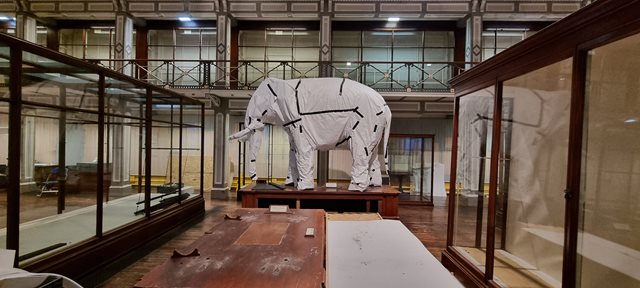
To allow these refurbishment works to happen, we first had to empty the building of the collections. This involved the complex and delicate task of relocating - or decanting - the objects. This involved the removal of thousands of fragile historical specimens of immense scientific and cultural value from the historic cases that they had been displayed in for many decades. The process was managed by a dedicated Decant Team, who assessed, then carefully removed objects from their display cases. Each object was photographed and inspected with close attention paid to its condition. This step was essential - partly to document anything that might need to be conserved to go back on display, but mostly to identify if specialist conservation treatment might be needed before an object would be stable enough to pack for transport.
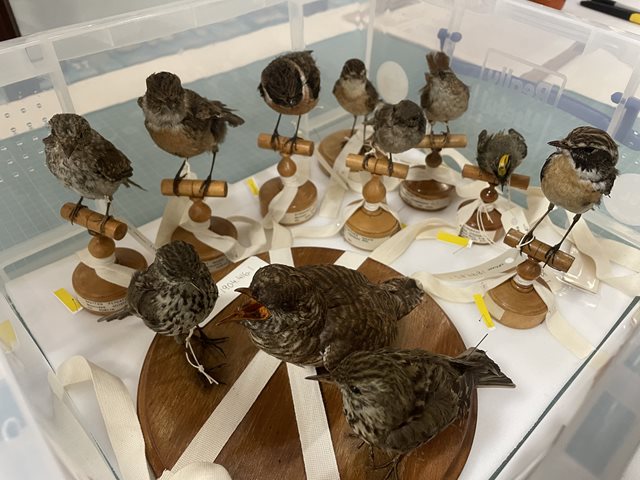
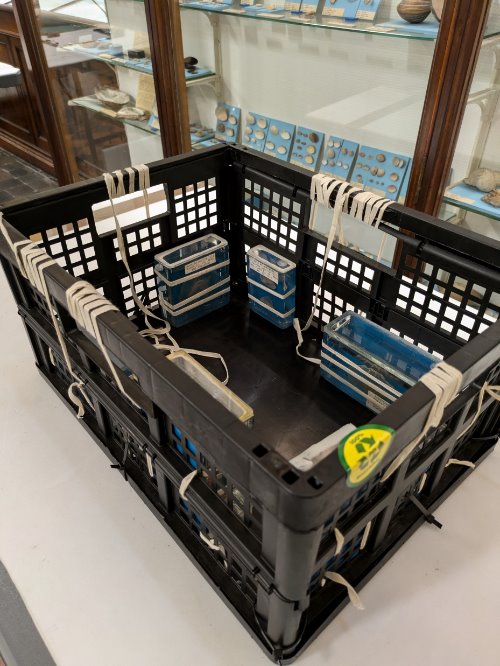
The packing of objects required tailor-made logistical solutions to be developed by the Decant Team. For smaller animals, carefully padded and secured crates were used to provide protection during transport. Large taxidermy specimens of four-legged animals are usually very stable, so they required little additional packing unless they had deteriorated over time. However, less stable specimens standing on two legs or mounted on branches or wires sometimes needed to be packed into wooden frames called "stillages", where they could be secured using cotton ties. These stillages were built on-site by the team from timber and designed for repeated use and stackability, to make the most efficient use of materials and space. Fluid specimens in jars were tied into mesh-sided boxes, which were then put into watertight crates containing absorbent material in case of any spills. These packing systems allowed the objects to be kept upright, stable and safe during their transport to our offsite storage facility by a specialist transport team from William Tracey & Sons.
When the objects arrived at the National Museum of Ireland storage facility they needed to be quarantined or frozen to make sure no pests such as clothes moths and carpet beetles were hitchhiking on the objects. After this, the objects underwent a surface cleaning process to remove loose dust and any dead pests. During this work, specimens in need of deeper cleaning or repair by specialist conservators were identified for future work. Finally, all items were arranged on new shelving units, where they will remain stored but accessible until they can be moved back when the museum reopens.
In the meantime, the museum team continues its work behind the scenes, preparing the objects for their return, but until then, we have brought some of the collections to Collins Barracks, where they can be seen in the Dead Zoo Lab, so if you want to see some old friends in a new space, why not pay us a visit?