By Hannah Preston, Registration Collections Assistant, National Museum of Ireland.
Introduction
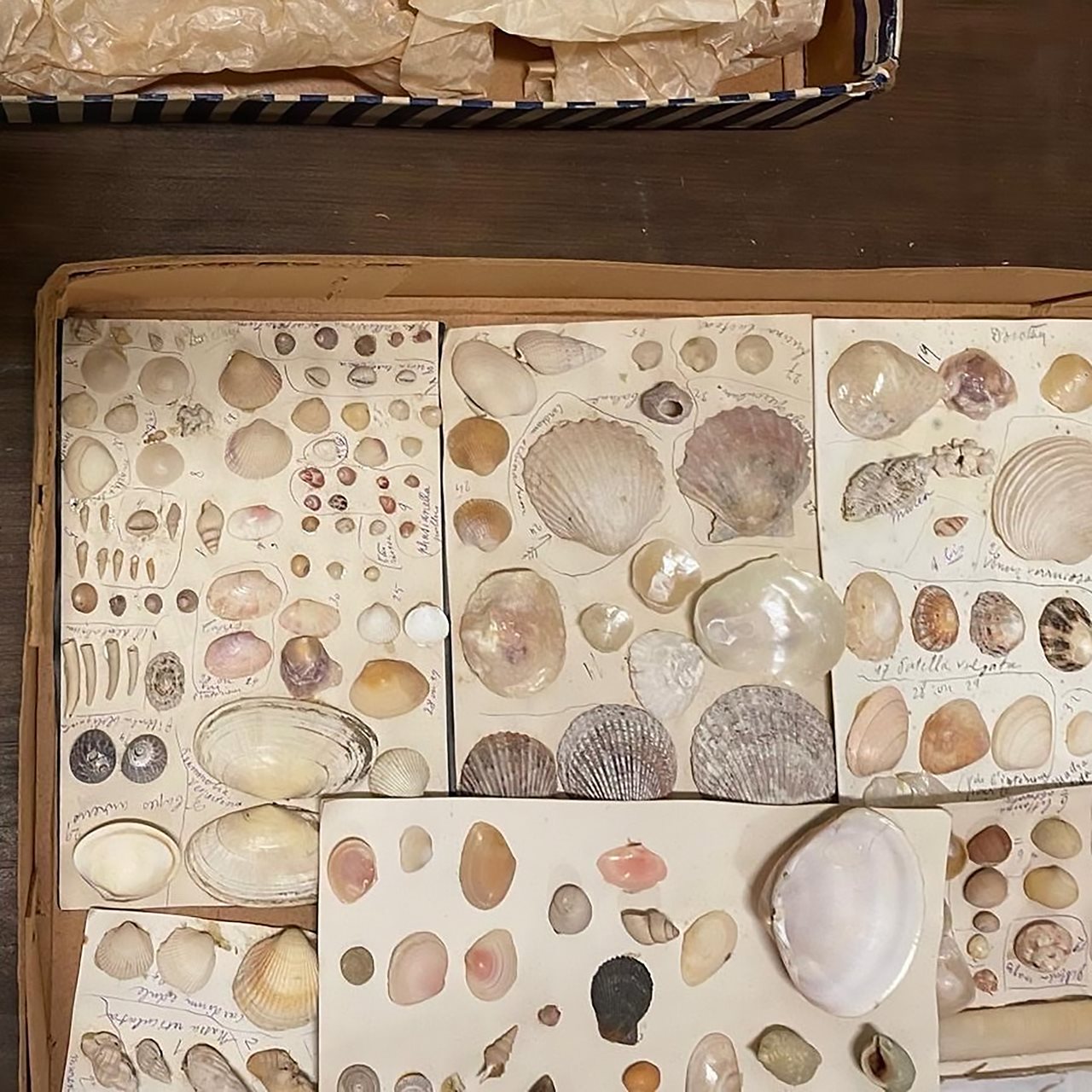
It is without a doubt that the museum has a myriad of interesting specimens, artefacts, and objects. However, one tends to overlook the dusty boxes and paper in which the items live. Even since before the founding of the National Museum of Ireland, during years of collecting by the Royal Dublin Society and Royal Irish Academy, curators, technicians and other staff saved on the cost of packing materials by using items lying idle close by. These boxes can be just as interesting as the items they stored.
Culture, Society and History
The type, style, and age of these packages can tell a lot about the social and historical setting these boxes were used in. Modern museum packaging is acid-free, “conservation grade” and suitable for housing delicate specimens. There was less understanding when this historical packaging was used, of the impact on museum objects.
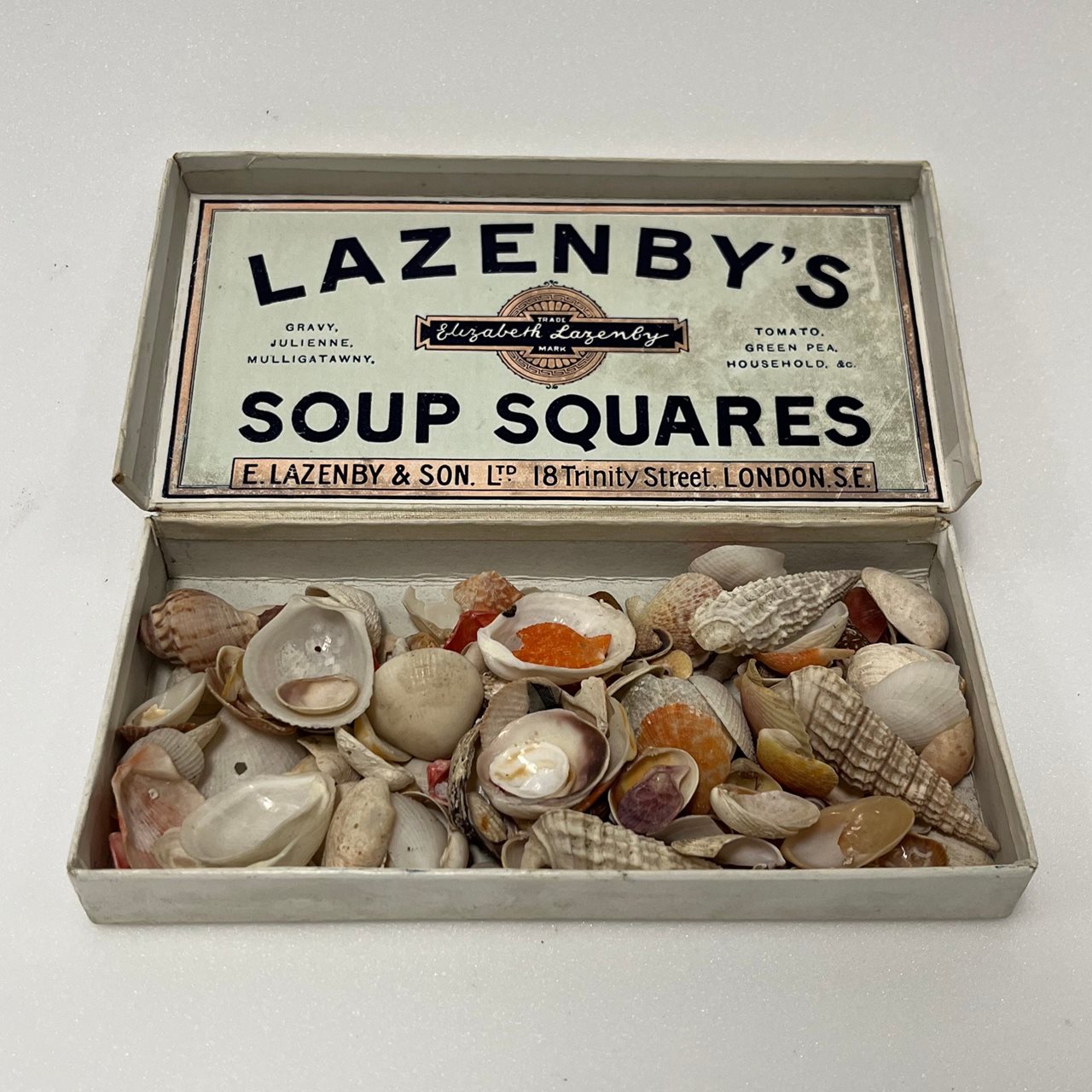
Most of the packages used were boxes or tins. These were generally cigarette or cigar boxes, pill, soup, match, dress, and book boxes, egg cartons, and cigar tins, with the newspapers of the time cocooning the object or specimen. It might be assumed that the objects and specimens went into the packaging around the same era as the boxes were made. However, the ages of the boxes do not necessarily correlate to the time the object was placed in them. But it does give a good insight into the historical time period.
An interesting note about the packaging is that nothing is made of plastic. The containers are made from cardboard, tin or copper. They highlight domesticity. Boxes of soup squares, egg cartons, typewriter ribbons and cigarette boxes present an insight into the domestic lifestyle of museum staff. It also, unintentionally, gives us a glimpse into the most used items of the time. The social identity of the Irelands pre-commercialised plastic era was a time when most women stayed in the home after marriage, while men worked outside the home and were considered the "breadwinners". We can see this reflected in the types of packaging the accessioned objects were held in. Cigarette, cigar and matchstick boxes dominate the collections, telling us these were the most common containers present, likely from the men of the day smoking their contents, and soup square boxes and dress boxes were obtained from the women of the households. The type of packaging also gives us a view of social class and standing. A dress box from Switzer & Co. (originally on Grafton Street, Dublin and now known as Brown Thomas) with ‘Summer Frock’ written on the back in pencil, suggests a higher income. The Egyptian cigarettes highlight travel or importation expense. Additionally, envelopes were often used to store dried, flattened, marine specimens. Typically, they were sent back from exotic locations like Indonesia, Australia, or the jungles of Burma. The envelopes found in the museum collection were usually titled with ‘On Her Majesty’s Service’ or ‘On His Majesty’s Service’ giving us a hint as to who the British monarch of the time was, pre-Irish independence.
Occasionally, objects/artefacts were donated to the museum in these types of household boxes or containers addressed to ‘The Director’. They remained in these boxes until they were rehoused in appropriate archival grade boxes. However, so much time was generally lost in between that the boxes became artefacts themselves.
Conclusion
In conclusion, containers hold the same fascinating tales as the specimens inside them. One can argue that the boxes are just as interesting and important due to their historical, social and cultural ties to the everyday person.
Check out my colleague's article on labels which acts as an accompaniment to my boxes article.
Bibliography
FUSIO (2019). Switzer and Company originally Mansfield Brothers, 89-90 Grafton Street, Dublin 2, DUBLIN - Buildings of Ireland. [online] Buildings of Ireland. Available at: https://www.buildingsofireland.ie/buildings-search/building/50910127/89-90-grafton-street-dublin-2-co-dublin
National Museum of Ireland. (2023). A Secret History of Museum Labels | National Museum of Ireland. [online] Available at: https://www.museum.ie/en-IE/Collections-Research/Registration-Department/Registration-Blog/Reading-Between-the-Lines.
National Museum of Ireland. (n.d.). History of the Organisation. [online] Available at: https://www.museum.ie/en-IE/About/History-of-the-Organisation.